Monday, November 02, 2009

Falling In Love With Cats-Spring 2009

Falling In Love With Cats

By Raven Ariana, Spring 2009


When I reminisce about my passion for felines both wild and domestic I remember a few key influences. My grandfather was passionate about animals and used to bring home critters he would find on the desert construction sites that he superintended. He would show me lizards, snakes, tarantulas, and other small creatures. I’d hold them and admire them for a day. He would then return them to their original home. I always wanted to keep them as pets, but he would always say that they were born, lived, and must remain free. He did get me a pet chipmunk, my first exotic.

I also used to love to watch Wild Kingdom and Daktari. I really enjoyed these shows. Loving Clarence the cross-eyed lion was when I decided that I wanted to have a pet lion. Looking forward to observing Jim Fowler’s adventures inspired me to some day become a naturalist in the field. Right now I don’t own a lion and my naturalist adventures tend to be via the internet or at FCF (Feline Conservation Federation) member facilities. I still keep hope in my heart.

As a young child I often lived with my maternal grandparents. My mom had a turbulent life and I’d end up there, often lonely. I was a curious child and this led me to visit around the neighborhood where I met Agnes, the Cat Lady. Agnes rescued stray, abandoned, neglected, and feral cats. Her husband built her a state of the art series of cat condos and an enclosed garage size structure for the cats she cared for.


I learned my first basic feline husbandry from Agnes. She taught me about cat politics; who got along with whom, which cats had special health issues and the care they needed, how to feed and clean litter boxes, play and love for enrichment, care of the elderly, and which cats just liked to be left alone.

I was a lonely little girl and Agnes always had time for me. We would read “Cats” and “Cat Fancy”. She would make me tea and special crepes. She taught me how to make crepes. She treated me as a person, not a little kid. One of the things that made me feel special is when her elderly grumpy cat that hated most people would come sit in my lap and let me gently pet her.

After I was married to my husband, we went back to my grandparent’s old neighborhood. I knocked on Agnes’s door and her husband answered. I asked about Agnes and he told me that some neighbor had complained a few years back about the cats. The city seized her cats and put them down. Agnes was dead within the year from cancer. I believe that she would still be alive if her cats had been left alone. The cats were not a nuisance, were clean, healthy, taken to the vet, did not stink, or make too much noise. Agnes was not mentally ill; she had a kind heart and loved cats.

I now work to my best ability to protect the right to responsibly own the pets of our choice. I support animal welfare, education, conservation, and research. It was mentioned to me by a fellow FCF member that Jim Sanderson believes the key to small cat survival is “an exotic cat in every home”. We all need to fight together against the massive wave of animal bans and work to reverse these bans in places where they exist. If we love our cats and every animal we owe it to them. I write this out of my love of cats and all animals.

Copyright © 2009 Raven Ariana
Photo Copyright © 2009 Shapeshifting, INC.


www.REXANO.org

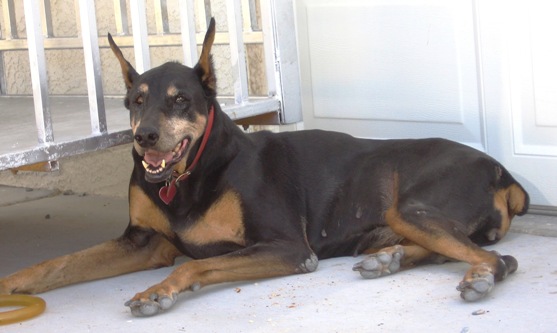
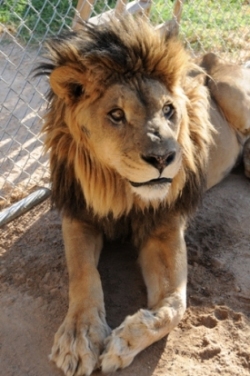
Caring For Fluffy and Fido in Their Senior Years-December 2008

Caring For Fluffy and Fido in Their Senior Years

Editorial By Raven Ariana, December 2008

We all remember fondly when our pets were young and in their prime. Fido, the dog, fetched his Frisbee non-stop while Fluffy, the cat, chased her laser toy until she lay panting and worn out. Fluffy and Fido were energetic, healthy, easy to care for, and did not need extra effort or consideration. All we needed to do to achieve a healthy happy pet was feed, play with and love, take him/her in for annual exams and vaccinations, and provide the proper structure and socialization needed to get along in our family and human community.

What happens as Fido and Fluffy age? We may see a pet that is slowing down, sleeping more, playing less, and possibly developing health issues that are age related. How can we as pet owners help Fluffy and Fido enjoy their retirement?

Becoming educated on the realities of having an elderly pet is a good start. Issues that we might focus on are proper diet, reasonable activity level, and potential health issues. Awareness and observation are also important tools to use in assisting an elderly pet. When we practice awareness and observe our pets in action we can detect when there is a problem or when changes are needed.

A good example of observation and awareness is in the detection of pain. Cats in particular are very stoic when it comes to pain. This is a result of their evolutionary position of being prey as well as predator. A prey animal cannot afford to exhibit any signs of weakness. When we practice awareness and observation we can see that Fluffy flinches when she jumps from her cat tree. We then can take her to her veterinarian who can diagnose the problem and offer an appropriate remedy.

These skills are also critical when Fido begins to gain weight. There comes a time for the aging pet when changes in diet are important. Fido’s quality of life and longevity will decline if he is kept on the food of his youth and allowed to carry extra pounds. Our trusted veterinarian can advise us as to the proper diet and how to change from one diet to another. She/he can also give guidance on an appropriate exercise regimen.

Our veterinarian is our best friend when it comes to elderly pets. I personally have a cat vet, a dog vet, and a herp (reptile) vet. The clinic I go to also has a vet that specializes in surgery. The vets are also skilled in geriatric (elderly) animals. It is very important that aging pets are given annual examinations and appropriate tests, blood-work, and dental procedures. This helps our companion to have a comfortable life and allows our veterinarian to monitor the animals progress and condition.

Areas for pet owners to monitor are weight, pain, stress, changes in personality, breath quality (rotten breath could mean tooth decay), alertness, urination difficulties and frequency, water consumption (can indicate diabetes or other issues), hearing and sight changes, mobility, cognitive (mental) functions, muscle strength and co-ordination, activity levels, and food consumption. All of these areas can be important indicators of problems or needed changes.

When health problems happen we may need to alter our lifestyles or household accommodations. An elderly dog, or cat, with severe arthritis may need a pet ramp installed to help her/him to a couch, bed, or other resting place. A pet that has gone blind may need to have the furniture kept in the same place and all unfamiliar objects put away on a regular basis. Pets with cavities and tooth decay may need dental work. Animals that have certain health issues may need special medications on a regular schedule. Other handicaps caused by age may need a caregiver who resides in the home and can assist the special needs elderly pet.

Diet is a big concern. We may need to change our pet’s food to a formula calculated for the aging pet. Extra nutrients, pro-biotics, and ongoing awareness may become necessary. Pro-biotics are organisms that beneficially inhabit the digestive tracks of animals. Yogurt is an example of a pro-biotic that can help balance the digestive track of elderly animals.

When life threatening health issues occur we may need to evaluate the feasibility of interventive therapies such as insulin when a pet has been diagnosed with diabetes. Can we maintain the regimen of insulin treatment? How can we gauge when an animal has had too much insulin and is experiencing insulin shock? The diabetes questions are just an example of the questions we need to ask ourselves, and our vets, when determining to treat a condition that is ultimately fatal. We may need to administer various medications via a variety of methods to help our companions enjoy a good quality of life in their twilight years.

What happens when our aging pets are suffering and the situation does not improve? This is when we have a talk with our trusted veterinarian about helping our friend across the “Rainbow Bridge”. Compassionate euthanasia is sad for the entire family, yet sometimes the most kind solution. When we face this choice we can choose to be with our pet when the fatal injections are given. We can then have our pet cremated and hold a ceremony that honors our beloved companion.

Being a mom or dad to an aging pet offers the rich heritage of memories and love. Our senior pets are love angels. To those humans willing to learn, our pet senior citizens gift us a fountain of involvement and experience that teach us about the full lives which our companions have led. With love in our hearts, an adaptable and responsive lifestyle, and the understanding that older pets need a bit of patience and extra care, we can successfully offer our companions what we all might wish to have offered to us in our own twilight years.

Copyright © Raven Ariana 2008

Dog Photo © Mike Friese 2008

Lion Photo © Zuzana Kukol & REXANO 2008

www.REXANO.org

There Is No Such Thing As A Free Pet-Winter 2007

There Is No Such Thing As A Free Pet

By Raven Ariana, Winter 2007


Some time ago I was on a yahoo group for exotic cat owners when one of the breeders who listed their kittens via the group posted a picture. The picture was of some kittens sitting with mirrors all around them. Her message was, “Guess how many kittens in this photo and win a prize.” For fun, I looked at the picture and figured out that there were three kittens. I shot her off a response with my guess. A little while later the poster sent me an e-mail asking me if I was a breeder. I answered that I was a simple pet owner.

I received a second e-mail inquiring if I let my pet cats go outside of the house. I wrote back and told her that my pet felines were strictly indoors only. The third message I got was that I was the happy winner of one of the kittens in the picture, as long as I was willing to pay for neuter, shipping, heath certificate, rabies, and willing to sign a contract. At the same time an announcement was placed on the list that I was the happy winner of one of the F-5 Bengal kittens in the photo.

This announcement provoked a flurry of upset and outraged e-mails. There were a few lovely congratulations. The majority of the posts, on and off list, were about how “unfair” the whole “contest” was and why did I get to “win” this kitten. It went on and on. The funny thing about the whole drama was the fact that the breeder was trying to be nice and do this as a promotion and I never in a thousand years, when I responded, expected to win an expensive kitten.

Any prize I might have expected might have been along the lines of a bumper sticker saying, “I love Bengal Cats,” or a mug, or something like that. Did I expect to win a Bengal kitten? “No!” would be my answer. Did I want a new Bengal kitten? Good question, that. Taking on a new pet is a great obligation and something any responsible pet owner takes seriously, despite all the Animal Rights hype you read about in the news or hear on television.

With shipping, neuter, rabies, and health certificate the price was going to be between three and four hundred dollars. Then there was the price of the shipping crate and the price of my veterinarian to do his health check. I always have my own veterinarian do a health check on new animals coming into the homestead. Then there was the matter of considering a quarantine space before introducing the new guy to the rest of the family.

Meanwhile the e-mail attacks on and off list continued. I was shocked that some of the attacks came from other Bengal cat breeders. This little kitten was pet, not breeder, quMeanwhile the e-mail attacks on and off list continued. I was shocked that some of the attacks came from other Bengal cat breeders. This little kitten was pet, not breeder, quality. Why would any reputable breeder be angry over a pet person “winning” a pet quality kitten? Sheesh, there is nothing any one can say about me that could be more true than the fact that I’m a stubborn individual. I might have been teetering on the edge of indecision about whether I wanted to pay (the incidental expenses) to take on a new kitten, but the nastiness pushed my stubborn button. What a bunch of Wahoolabits (drama stirrers)! The fact that they didn’t have quality lives of their own meant that I was going to have to make the decision to have a new little friend in my own far from empty life.

If any of you have read my children have grown up and moved away and that my mate has given me free reign to what and how many pets I can have. I did ask him, though, you’ll already know that all of my children have grown up and moved away and that my mate has given me free reign to what and how many pets I can have. I did ask him, though, about his opinion of the whole situation. His response was at first incredulous. He couldn’t believe the negative fuss and drama that some of the members of the exotic cat list were demonstrating. His next response was that it was obvious that we would probably be a better home for the little guy than some of the “Wahoolabits” on the list. I do want to say here that there were a couple of solid fellow exotic cat list members, who were happy for my good fortune. They couldn’t believe the drama either.

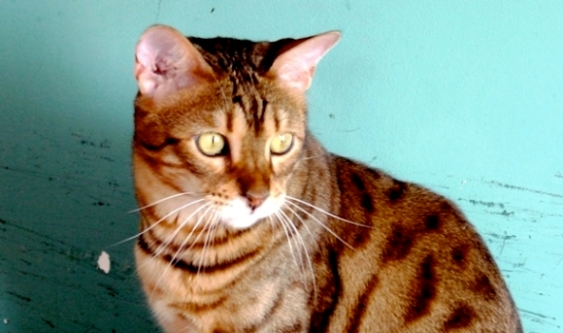
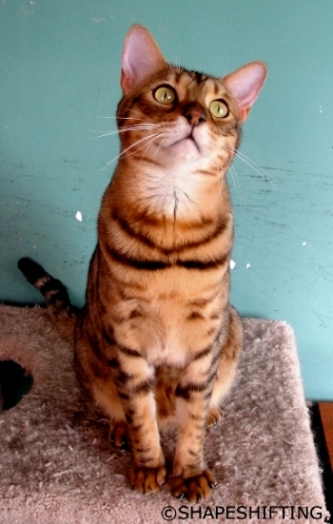
Enter in to my life Mr. X Marks the Spots. Mr. X is a pet quality Bengal considered to be of early generation. This means that he is close in line to his exotic forbearer, the Asian Leopard Cat. Mr. X has a cool coloured coat that is highly spotted and ticked. His head shape is interesting and not characteristic of many Bengals. He actually looks like some of the F-3 and F-4 Savannahs that I have seen. One Savannah breeder who has seen photos of Mr. X said that he is the type of Bengal that Savannah breeders like to use in their breeding programs.

Mr. X’s personality is also non-characteristic of other Bengals. He is silent, never meows (my other Bengal is an opera singer), and has a very sweet and somewhat silly attitude. He loves to play tricks on the other cats, like locking them all in the bathroom. He’ll also swat you with a paw if he doesn’t like something that you do. He gets along with everybody and likes to race around the cat trees like a crazed thing. He is very busy and has lots of energy. We call him “the peeler,” because he likes to peel out in the tradition of the hot-rodder. His theme music would have to be some of the newer works by Jeff Beck.

He’s also different from my other Bengal, Mr. Ozymandias who’s favorite saying is, “Bring me your finest meats and cheeses.” Oz is a gourmand with a spectacular appetite. X is a finicky and iffy eater. He will actually pass up his raw rabbit or cooked chicken thighs in favor of pulling a trick on his fellow felines. His favorite saying is, “Hey, guys, there’s something very interesting to see in the bathroom!” When they all enter, he quickly closes the door. Since he is silent he communicates via telepathic mind control.

There’s no such thing as a free pet. Anytime a person makes the decision to take in that cute little kitten or puppy, they need to understand the expenses that will be incured. Food, toys, beds, cat furniture, leashes and harnesses, veterinarian bills, and more are the price one will pay when taking on a pet and being responsible in the care and feeding of said pet. You might also have to pay for some damage if your puppy or kitten destroys things (natural behaviors of some puppies and kittens). One also needs to consider the nature of the particular pet that one is committing to.

Animal Rights extremists want the general public to believe (especially legislators) that most people are irresponsible, ignorant, and plain cruel AR advocates harp on and on about the huge issue of pet overpopulation, yet they are not honest in their reporting. It is true that some areas of the United States have a problem. What does AR not state openly is that the biggest problem of homeless pets is with feral cats and large dogs that have not been properly socialized. Some shelters are actually importing pets from other countries to fill the needs of their clientele. Some areas of the US have problems while others have a problem with supplying enough pets for the people who want them.

What happens when all pets are sterilized and breeding ends? Will this be the end of pet ownership? Will this open a new industry? How expensive will pets become when they start being produced in corporate puppy and kitten mills? Could this already be happening? These questions enter my mind when I see some of the legislation being passed around the country. I also ask myself this when new animal breed bans are passed. I can’t own an exotic cat, next I can’t own a pit bull mix, then I can’t own a ferret, next I can’t own a gerbil. At the same time the pet industry rakes in billions of dollars in profits. How can they profit if pets are banned? Follow the money. Have you ever seen how much salary is paid to those who run HSUS or PETA? You can easily find out by checking their tax filings with the IRS. Money is the grease that lubes the wheels of legislation.

Why am I going on an on about the AR big money agenda when I started talking about Mr. X who I “won” in a contest? It goes back to the outrage expressed at the supposedly “free” Bengal kitten I now own (money, money, and more money). Breeders were upset because they felt that they lost out at “free” money in the form of a pure bred kitten. Other pet owners were upset because they lost out on a “free” pet kitten. Yet, I have demonstrated that Mr. X has been far from “free.” I paid money for him upfront before I ever picked him up from the airport. Pets always cost money in one way or another. This is a fact of responsible ownership. AR isn’t going to change this fact, they might just boost up the price so that only the upper classes can afford to own a pet.

I love Mr. X and my other animal friends. Money could never come close to purchasing the love and fun that they bring in to my life. I want my great-grandchildren to have this opportunity, too. I am happy for the money I have spent to bring Mr. X, Ozymandias, and others to my homestead. The satisfaction and happiness is worth every penny. I am a person who understands that there is no such thing as a free pet.

Raven Ariana has worked on animal welfare issues for over 20 years, including a 2 year appointment by the County Commissioner to her local Humane Education Advisory Board.

Photo copyright © Shapelifting, Inc.


www.REXANO.org

Boa Love 10/07

Boa Love
By Raven Ariana, October 2007


Cowboy first came to me as a wee pencil sized snake. My children had all flown the coop and my husband had promised that once that all of our dependents had vacated the premises I could have a snake.

I fell in love with snakes when I read Vonda McIntyre’s “Dreamsnake”. “Of Mist, Grass, and Sand” was an award-winning novella that allowed her to expand the story into a full-length book. This is an out of print title, but well worth the read.

It was a few years later when I found a green snake in a pet store. I purchased him/her and set up a herpetarium. My ex-occupant made it abundantly clear that next to mes’cans, the “N” word, and homos, snakes were worthy of the ultimate elimination from the Earth. Sad to say that he was a self-proclaimed bigot of all things human and animal. He even protested the existence of certain vegetables that he claimed to despise. I think that he would have found kinship in the arms of the extreme Animal Rights/Animal Extinctionists.

I named my green (grass snake) Grass. He dined on crickets and mealworms and would adorn my wrist with obvious pleasure. Grass was named after the Dreamsnake that motivated the plot of Vonda’s book. Sadly most folks thought that “Grass” was named after the herb Cannabis Sativa but I was not a doper seeking solace in a snake name. I was just a reader with an overactive imagination.

Grass was “disappeared” when I divorced the ex-occupant father of my children. I had lingered too long in a violent marriage. Why was I surprised that Grass was gone? The ex had complained every time I handled Grass. He would claim that Grass made lewd and obscene movements on my wrist. Sadly it was to be many years before I would have another snaky pet. By the way, I have to credit my good friend Butch for the term “Occupant”. As writer William S. Burroughs was known to say, “That’s good enough to steal!”

Take a moment to time warp forward to a year (actually 2006) after the children are grown up, gone, and have reproduced. As the nest empties a funny thing happens. Perhaps you have heard the phrase “nature abhors a vacuum”? Well, I can tell you first hand that there is some kind of gravity like truth to this saying. I have cleared space, time and time again, only to see it filled with stuff like junk mail and my untidy way of “organizing” paperwork. When life leaves a space, life likes to return in spades. In place of the two grown boys who left home, a myriad of creatures came to take their portion of the not-so-disposable income.

There is no such thing as a “free pet”. Repeat this phrase at least three times while clicking your sneakers together. The animal I paid the smallest amount of money for was a local “rescue”. Her name is Velvet and she is a black, domestic, medium length hair cat. You can see a photo of her if you look at the REXANO reptile photo section. She is posing with her Boa buddy, Cowboy.

Velvet cost about $100.00 in adoption fees. Of course, this was fine with me as it included shots, spay, and a health check from my trusted veterinarian. Consider the love that would be returned, a real bargain. Velvet could have been a poster child. Her sad life, rescued from a well-publicized fire, and all the rest of the drama, could easily have filled the coffers of those organizations that survive on donations and high profile stories.

I like the rescue/foster group that placed Velvet. They downplayed the media’s BS about the “Fire Cats”. They said that the woman who had Velvet did not fit the “cat hoarder” profile”, even though the woman had many cats (more media BS), and they were honest about Velvet’s not-always-so-nice disposition.

I do not consider myself a “pet philanthropist”. I do not tout the sad stories of the “rescues” that I have purchased. Most of my life I have bought pedigreed purebred animals and have always felt good to do so. I choose my pets for confirmation, temperament, and breed that suites my lifestyle and expectations. I come from a line of farmers, ranchers, and hunters. I was always told that you don’t buy a bird dog to herd stock.

Being a self-confirmed, genuine, home-girl (sheesh, when my mom died I had to find a home for her 23 bowling balls and her trophies for skeet/trap shooting, fishing, bowling, and single ski water skiing), I’ve had a weighty legacy to live up to. I hate to bowl (too many hours spent as a child at the bowling alleys), can’t ski worth a damn (never made it to a single ski), can shoot (but husband hates guns), and only fished with Pop (my maternal granddad). This left me a rogue in my own family.

What to do? Even though my family hunted, they also always enjoyed animals and if I truly examine my roots, I will see that Pop actually planted my love of reptiles and all kinds of creatures considered “oogey” by the masses. Pop was a construction superintendent in a desert climate and delighted in bringing home desert creatures to his favorite granddaughter. Miss Raven always wanted to “keep” these pets. Horny toads, snakes, lizards, scorpions, and tarantulas would have had to endure the endless attentions of a small child, although Pop always taught me that these creatures had their own homes. I could have their company for a day, but then he would return them to the desert.

Back in the present we now consider Cowboy the Red Tail Boa Constrictor. My life was to a point where I was negotiating with my mate to get a new snake. I discovered that “Green/Grass” snakes were no longer an option. The revelation became known that nobody had actually succeeded with helping a Grass Snake survive in captivity. Grass Snakes are native to the US and were a popular seller in pet stores in the late ‘70s. Sadly most of them died. They would not eat and thus starved. I never found anyone besides myself who actually had a Grass Snake survive for as long as a couple of years.

Since I couldn’t have a Grass Snake what kind of snake would fit my lifestyle? After much research I decided that a Rosy Boa might work well. Being a smaller Boa, the Rosy seemed like a logical upgrade to the Grass Snake.

I like to be prepared when I’m bringing new life into the “nest”. Knowing that I am a “snake newbie” I consulted, Jackie, my reptile mentor. I cannot sing the praises of Jackie enough! She is a thorough, conscientious, totally accessible person who loves reptiles. She has been a long-standing herp rescue heroine. I would like to express appreciation to Jackie and the Pacific Northwest Herpetological Society for all of the outreach and information they are and have been willing to share. Thank you, Jackie and PNHS!

Jackie knew of a couple of Rosy Boas that could do with a home where there were only a few reptiles. During negotiations her female Red Tail gave birth to a litter of kittens (snakelets?). She had an absolute favorite, a colourful individual with a perfect horseshoe marking in one of his bands. She could not keep her favorite because she needed the space for rescues.

Jackie has always graced me with trust, as have others. She felt that she would like me to give a home to her special snake. At first, my hubby was not willing to consider a snake that might get to be over the three-foot length of a Rosy Boa. He wondered if the boa might grow large enough to consume a cat the size of a small Pixie-Bob (cat). He reminded me of the expensive nature of the purebred registered cats in our clowder (group of cats). How could I even take the risk?

With a little help from Jackie and her reassurances to my all-patient partner that these snakes only eat already dead and previously frozen mice and rats, his reluctance was overcome. I would get to have three snakes. Next came the wait until it cooled off enough to ship all the boas together. During this time I would get my herpetariums purchased and set up. These habitats were/are several 20-gallon (long) aquariums, reptile lids, heaters, lamps, substrate, water dishes, hide logs, thermometers, and humidity gauge. (Cowboy has since outgrown his 20-gallon). Actually, he’s outgrown his 40 gallon especially designed herpetariaum.

Cowboy arrived a mere pencil sized snake. How cute is that? Everyone wanted to play with him before he grew. Fine, pencil snake…but can’t you love the full grown individual? Isn’t this the problem with many naïve owners? The same issue happens with domestics. “How Cute!” these idiots exclaim until they reach adolescent behavior!
Irresponsible behavior is even more rampant among the “exotic” community.

One of the best markers of my life as an exotic owner was when my mate, in the dark, yelled many a swear word. He had tried to take Cowboy out of his enclosure and Cowboy bit the crap out of him, in the tune of drawing blood. It seems that reptiles are
“Creatures Of Habit”. Maybe snakes bond with their handlers or maybe they don’t’. Cowboy has never struck me. He moves on my body as elegantly as Grass once did, though he’s a bit bigger. I feel boa love.


Photo copyright © Scott Simons & Shapelifting, Inc.

www.REXANO.org

Samhain 2009 (2)

DREAMTIME IN OUR BODIES ©
by Lady Raven Ariana

Samhain brings us to the North West quadrant of the Wheel of the year and qualities concerning both these directions become easier to access. This year’s November in my region is seeing mild weather, thunderstorms, and rain. We have been trading sunny days with trees dressed in beautiful fall colours with cooler days/nights of rain and thunder. I live over four thousand feet above ocean level, over the ancient sea floor of what was known as Lake Bonneville. My house resides directly above the Wasatch fault on the first foothills that lead to the Rocky Mountain range. We are also part of the Yellowstone caldera, a geo-thermal hot spot caused by the volcanic activity that takes place when tectonic plates collide.

Earth, Water, Fire, and Air are all very active where I reside. My home is situated next to the natural outlet of a canyon and next to two different riparian corridors, coming from two different canyons. Though this is part of the “big city” the Elements are close at hand. Canyon winds come down my way and thunderstorms are active at different times of the year. We even get the rare tornado or two, and an occasional waterspout in one of the remnants of old Lake Bonneville, the Great Salt Lake. If I desire a spiritually active island spot, I visit Antelope Island. Most of us fear the shift of the Wasatch Fault and what could happen if “The Great Earthquake” tumbles our world.

For me the element North includes land, our physical selves, our homes, the location where we live, and the Spell of Change, “To Be Silent”. West is the realm of the Ancestors, the gate to other realms, dreaming, our emotional bodies, and the Spell of Change, “To Know”. Combined these two Elements bring a perfect opportunity to work with our Ancestors, begin or deepen dream work, and examine our relationships to our families and homes.

Dream work is a process using tools like journaling, or the recording of our dreams. Dream recording is best done right after awakening. It is common to leave a dream journal and pen next to our place of sleep. Further dream work consists of looking at the patterns of our dreams and trying to understand what our dreams are trying to tell us. This happens as a function of dream recording then reviewing our journals over time. Some people even look at symbolic interpretations of their dreams via archetypes and cultural/personal symbols.

Some people don’t remember their dreams and must begin a practice that encourages their abilities to retain dreams after they awaken from sleep. This might mean using meditation practices, setting an active intention before bed to prompt memory, ingesting herbal teas before sleep, or other tools that help the dreamer access and remember their dreams.

Dreams happen in our physical selves and reflect our hopes, fears, aspirations, familial relationships, spiritual promptings, the processing of events, and other information in our sub consciousness. Dreams can also predict a future, issue warnings, and offer instruction from our Spiritual Guides and Ancestors. Dreaming is extremely personal and must be personally recorded and examined to determine patterns and what our dreams are telling each of us. This means that “dream interpretation” only goes so far. What one dream element says to one person might be different for another. There is no substitute for personally working with one’s own dreams. Dreaming, along with her sister, Journey, are very potent tools for any shaman’s ability to positively affect her/his own life and the lives of others.

Here is a recent dream I have had. It won’t mean much to most of you, but it communicates to me.

I am at a cat show in a hotel where our show has been given a tiny space that does not allow set up of our cats and the judging of our cats. I’m there with two cat friends and others that I know from the world of cat shows. Folks are complaining that there is no place to set up their cats’ places, let alone where will all the judges actually examine and compare all of the cats (I am leaving out cat show terminology for you all}. I’m trying to help out and ease peoples’ fear and anger. I suggest that we talk to the hotel management and get this straightened out quickly before more exhibitors arrive. Everyone is extremely anxious. I try and lighten the mood and suggest that since it is close to Halloween we could wear our cats on our heads and call them “fright wigs”. Everyone laughs at this silliness and I awaken when my Savannah Cat starts twitching in his sleep at my feet.

Though this silly dream is beyond many peoples’ ability to interpret, I used it as guidance. I talked to both of the “cat friends” from my dream to share the silliness of the ‘fright wigs”. Friend number 1 has a husband dying from cancer. She had been having a bad week. When I shared this dream she laughed then unburdened herself. Friend number 2 called me this afternoon to update me on an upcoming move that had to do with her own cats. I shared the dream and she also laughed and this lead to more sharing. These interactions provided opportunity for support and potential healing.

Dreams are often surreal, bizarre, evoke extreme emotion, or seem to make no sense at all. This is why it is very important to work with them in a dedicated fashion. Your dreams can be one of the most transformational tools available and can help you work with those parts that you hide from yourself, the parts sometimes known as “the shadow”. Learning about one’s “shadow” is called shadow work and needs an article dedicated all to itself. Perhaps for the next issue of “Earrthsongs”, Bride will shine her light and a “shadow” article might be forthcoming.

In the meantime, start keeping a dream journal. Record your dreams or begin the work to remember them. If you are a “wounded healer” like many of us here, you will find your dreams disturbing but a powerful helper. Check into the geography where you live and compare it with your own spiritual work. If you need inspiration or prompting, journey to your spiritual guides and ask for help. Call on the Ancestors to aid you in navigating this darkening time of the year.

In the more Northern Hemisphere we are moving towards the Longest Night. Mystery cloaks herself in darkness, while our dreams bring us an opportunity for our deepening understanding. As the trees paint, then shed their Autumn leaves, we can look at our hibernating brother/sister plant and animals then take in the lessons shared. Rest, look deep within our dreaming, replenish, and be ready for the next lessons and seasons to come.

Blessed Be!

Samhain 2009 (1)


Hare and Lynx: The Cycle of Life
c.Lady Raven Ariana

When we look around us we can observe relationships and the patterns of interactions between predator and prey animals. These balances are vital to keeping ecosystems healthy. The predator/prey relationships experience times of change, waxing and waning in order to keep equilibrium over time. Their ebb and flow cycles adapt to seasonal variations that shift because of different climate factors, food availability, other animal/plant species interactions, various other environmental factors and disturbances by humans.

In the North American Rocky Mountain region we can observe the scientific study of the predator/prey cycle in Lynx and Snowshoe Hare. Observation over time has shown that the numbers of Snowshoes and Lynx varies. There are years that there is a population explosion in the Hare, followed by increased births of new Lynx. Then the pattern shifts and the Hare die off, leaving the Lynx to starve and expire from disease. Other years too many Hare and too little Lynx mean starving and diseased Hare.

This relationship is a dance that follows food availability that is affected by precipitation, temperature, specific plant growth, and competition from rivals. What has been discovered is that the amount of food available effects the population of both species. When there is not enough food for Hare, Hare dies. Lynx feeds on Hare. When there are not enough Hare, Lynx dies.

Natural adjustments take consideration of variance over time in climate and other factors affecting food availability for both species. Left intact this allows a dance of ebb and flow where both species survive overall. Some years the Lynx are few, other seasons both Hare and Lynx are scarce, yet during some times we see abundance. In a healthy system the pattern of the dance allows adaptation so that both species and the other plants/animals in co-habitation survive with the maximization of genetic diversity given differences in local climatic variation. Genetic diversity ensures the greatest chance overall of species survival. The more species survive the more everyone survives.

The dance of predator and prey is crucial for all. Balance needs to be achieved in the long term because false unbridled growth of any species for too long can equal disease, starvation, and even the loss of genetic variation.

What does this mean for the Celtic Shaman or other spiritual practitioner? Cycles happen and can be observed over more than a single year and a day. This means that we can be faced with life’s lessons over and over again, seen from different parts of the cycle, even when we think that we have already learned the particular lesson being represented. This also occurs with ancestral issues. We may carry lessons to be worked out that we have inherited from our ancestral lines. These issues might relate to parent/child struggles, creative expression, stress coping patterns, and anything else that has to do with living life in this classroom we call Mother Earth.

What Hare and Lynx can teach us is to use journaling and observation over time to see these larger patterns. We can then read back and see the cycles, how they play out and interact. Perhaps we can apply new tools to create healthy change in our interactions with these patterns. We can even change ourselves, heal, and move on to new lessons.

To learn more about Lynx and Hare read what is known about these animal helpers.
To start go to:


Canadian Lynx:

http://en.wikipedia.org/wiki/Canadian_Lynx

http://animaldiversity.ummz.umich.edu/site/accounts/information/Lynx_canadensis.html

http://www.nwf.org/canadalynx

http://ds.dial.pipex.com/agarman/canlynx.htm

Snowshoe Hare:

http://en.wikipedia.org/wiki/Snowshoe_Hare

http://www.museum.state.il.us/exhibits/larson/lepus_americanus.html

http://animaldiversity.ummz.umich.edu/site/accounts/information/Lepus_americanus.html

http://www.adfg.state.ak.us/pubs/notebook/smgame/hares.php

Lughnasadh 2009 (2)

BIRTH OF A BEE ©
by Lady Raven Ariana

I belong to a local group of urban homesteaders that network, host workshops, socials, campouts and gatherings, and generally share knowledge, help, and support with each other. On July 21st one of my long time friends and fellow urbanites hosted an event about beekeeping in the city. She has a place in an older part of the city and has chickens, quail, bees, and a large garden. When we gathered in the afternoon the temperature was scorching over 100 F. A canopy was set up to shade the treat and drinks table. There was no shading the hive, garden, or livestock. The lively children played in the water and on a trampoline. My friend had nicely packaged honey and beeswax with clever labels on display

Danielle Downey, our state’s Bee Inspector, joined us. It is currently legal to have bees, even in the city; yet you must register through the state’s agriculture department and pay a $10.00 yearly fee. Danielle had a wonderful presentation with large colour pictures showing various aspects of bee biology. She is enthusiastic, knowledgeable, and totally supportive of the urban beekeeper. She offered many resources and ways to learn about beekeeping, dispelling myths, and getting started. She talked about all aspects of beekeeping and answered questions. Our hostess chimed in and showed her methods of honey extraction and other experiences she has had. We saw an example of two different styles of hives and heard the pros and cons for each.

Danielle really urged folks to consider beekeeping because of the dangers facing bees in the modern world. Urban beekeepers may prove to be a strong hope for the continued existence of the European Honeybee (the bees that pollinate most of the world’s crops). Disease, parasites, genetic bottlenecking, and a not understood problem called colony collapse disorder is threatening bees. Modern home yard practices geared towards the reduction of food plants for pollinators and the pervasive use of herbicides/pesticides are also a problem.

Following a lengthy Q and A, Danielle said that the conversation and questions could go to the wee hours, now it was time to get down to the meat (or BEE) of the situation; opening the hive. My friend and Danielle explained all the necessaries (leverage tool, bee brush, smoker, and bee helmet/net…mostly to keep bees out of your hair.) In a traditional set up you have “supers” stacked on top of each other. The bottom supers contain the queen, eggs, and developing brood. The top most supers contain the comb honey.

When the top supers were opened there was trepidation with a few of our members. The bees remained calm and docile and soon FRESH honey in the comb was distributed to the ‘oohs’ and ‘ahhs’ of all participants, young and older. Supers can weigh 100 pounds or more and it took both our hostess and bee inspector to move them. After the couple of top supers were removed we got down into the actual functioning of the hive. We saw drones and new grubs, we observed how bees fed and fanned the honey to keep an even temperature. Denise plucked a few drones (non-stinging) for the children to handle. Even the most fearful child braved the experience to handle a buzzing drone.

A memorable moment was when Denise showed us how to see a Drone’s sexual parts and how to extract semen. Wow….not everyone has experienced this! She could deftly extract drones from any part of the hive we visited.

The highlight of the bee-show was the birth of a worker! She eats her way out of her cell, then immediately sets up housekeeping by cleaning up after herself. All bees are girls except the drones. Workers are utilized according to life experience. Young workers have nest duties, while older workers gather honey or guard the nest. Drones are driven out of the nest at the end of the growing season before winter, so not to waste resources. Bees cluster in the winter and maintain critical warmth by fanning their wings, clustering, and moving between layers of the cluster.

Bees can be maintained as far north as Alaska. Special winter techniques must be applied.

I have to say that seeing a worker bee emerging from her cell and tasting wild urban honey from the same nest is quite the harvest experience. Lughnasadh is first grain harvest. What better way to savor the holiday than enjoying local urban honey, quail eggs and the company of local urban homesteaders?

Lughnasadh 2009 (1)

DRAGONFLY & MONARCH:
SHAPE SHIFTERS & VOYAGERS
BETWEEN REALMS
©
by Lady Raven Ariana

I was sitting in my garden this evening contemplating the wild visitors when I noticed a very regal Dragonfly perusing my small bit of wild. I pointed her/him out to my mate and observed that he/she seemed to be looking for a place to perch. The Dragonfly then moved on. I live in the City with a tiny yard, though I’m close to canyons and streams.

My gardening styles of organic, xeriscaping, naturalizing, and attracting local flora and fauna were definitely seen as unpopular, non-conformist, and “bringing down the local property values” type of behavior from my neighbors. Many years later there are more xeriscaped lawns in our neighborhood while there continues to be a plethora of lawns and the chemical keepers to maintain them. The times are slowly changing.

Later in the evening the gorgeous Dragonfly returned. She/he decided to settle on the main power line that enters our home. It was an electric sight, the cable twined where Dragonfly crouched. The day’s last light haloed the wings to perfection. When I pointed this out to my mate, we were both reminded of the phalanxes of Dragonflies that would patrol our street. Last year they began to return after a hiatus of a number of years.

Dragonfly has an ancient heritage. He or She might be a harbinger of fate, good luck, and/or hope renewed. The Ancestors sometimes use Dragonfly as personal eyes to look over their line and make sure that their magical progeny are being true to the ancestral work. Where Dragonfly flies Ancestors watch. Dragonfly also brings some of Dragon’s archetypal magic and energy, offering protection and transformation. They are shape-shifters; their life cycle is lived in 2 very different elements.

Dragonflies are creatures of water and air. Eggs are deposited in water. The nymphs or naiads (young Dragonflies) feed on mosquito larva during their aqua phase. They continue this predation after their transformation into their adult flying form, feeding on many, many mosquitoes and other insects in the air. They aid in controlling mosquito numbers, thus helping to protect humans from mosquito vectored (carried) disease. Dragonflies and their relative Damselflies species, like frogs, can indicate the health or dis-ease of an environment. Both are sensitive to pollution, toxins, pesticides, herbicides, and environmental poisons of many types. If these creatures vanish from an area, this might indicate an environmental threat to people and other species, especially concerning water.

When Dragonfly comes to us it is important to examine our lives and our relationship to our environment. Do we have clean water to drink? Are we taking precautions to remain healthy when illness might be about? What might we need to change to better protect our spiritual growth? We may also need to consult with the Ancestors on how to best use our magic and transformational energy to further our spiritual work.

To learn more about Dragonflies and Damselflies:

http://www.ucmp.berkeley.edu/arthropoda/uniramia/odonatoida.html

http://www.discoverlife.org/20/q?search=Odonata

http://entomology.ifas.ufl.edu/creatures/misc/odonata/odonata.htm

http://en.wikipedia.org/wiki/Dragonfly

Butterflies and moths are viewed in many cultures as a symbol of transformation. Many myths are told incorporating the dramatic changes between the caterpillar, chrysalis, and emergent butterfly. Different species have/had stories that correspond/ed to the peoples and places they live and have lived. Magic is always a strong theme.

I have been carefully cultivating a patch of milkweed over the last few years. Year by year it has grown and I was pleased to see a pair of Monarch Butterflies dancing around it the other day. Milkweed species are the feeding plant for Monarchs. It is where they lay their eggs so that the caterpillars can eat and grow. There is good news and bad news about milkweed. Milkweed can be a victim of modern agriculture. Many herbicides are geared to kill it and pesticide gene-modified pollen can fall on it from corn by roadsides or spread via the wind, poisoning the Monarch caterpillars feeding on the contaminated plants. The good news is that milkweed is becoming more and more popular in butterfly gardens and an increasing number of people are cultivating it.

My milkweed is organic. Some of my neighbors think it is undesirable, though the flowers are beautiful. A special red beetle feeds on it, too. These red beetles were our first regular milkweed visitors.

Monarchs are one of the most popular of butterflies and are called “The Wanderer” in Australia because of their amazing seasonal migrations. North flow migrations begin in the spring in the Northern Hemisphere, while South flow migrations begin in the fall. Migrations generally span the lives of several generations. The last generation of Monarchs experience a phase called diapause causing them to go into a non-reproductive state. At this time they will over-winter in colonies. Monarchs can also survive a trans-Atlantic flight. The largest threat to the survival of the Monarch is habitat destruction and loss of its only food-source, milkweed species.

Monarchs journey across land and the elements. They are sensitive to the seasons. They begin their lives in the land realm and take to the air as adults. They are creatures of Earth and Sky. They are dependent on a particular family of plants for survival. Monarch can herald great change, initiations, journeys, pilgrimages, or a need for these in a person’s life. Monarch can also indicate a need for an examination of one’s system of physical survival. Where are we getting our food? Does this nourish us? Are we keeping our Spirits well fed, too? Are we living in an environment where we can thrive? Are we willing to change to grow and develop? Further Monarch might be telling us that we need to take a time out. How do we know what message Monarch brings? We need to listen carefully with our whole Being.

To learn more about Monarchs:

http://www.monarchbutterflyusa.com/Cycle.htm

http://www.monarch-butterfly.com/

http://www.monarchwatch.org/

http://en.wikipedia.org/wiki/Monarch_(butterfly)

To learn more about Milkweed:

http://www.geocities.com/bttfly9/growingmilkweed.html

http://en.wikipedia.org/wiki/Milkweed

Red Milkweed Beetle:

http://www.cirrusimage.com/beetles_red_milkweed.htm

http://en.wikipedia.org/wiki/Tetraopes_tetrophthalmus

Dragonfly and Monarch Butterfly share the qualities of shape shifting, magic, and journeying between realms, elements, and places. They both signify transformation, change and a healthy relationship to the natural environment. A special lesson these two guardians share is their ability to demonstrate the impact of one space or element on another. They both show connection. Wind can carry poisonous modified corn pollen to milkweed plants, which then poisons the earth-bound Monarch caterpillars. Air and earth can bring contamination to waterways where Dragonfly nymphs are poisoned. Habitat destruction will kill both species in all forms.

We learn from Monarch Butterflies and Dragonflies through developing our relationships to the very places we live, observing through the seasons all the creatures and habitat around us. We can apply the many lessons that these guardians brings to us both internally and externally; transforming the way we think, what we desire, what we feel, how we behave, and what we need to change. We might plant a butterfly garden or help clean up a waterway. We might make a sacred pilgrimage or experience an initiation. Gratitude and understanding is important in working with any of our guardians, champions, totems, or Ancestors. When we open our hearts in a sincere and grateful fashion we allow ourselves the space to hear with our spirits the messages they bring.

Beltane 2009 (2)

NATURE KNOCKING ©
by Lady Raven Ariana

As Spring brings the gifts of the Mother, the Bird People become active in their courtships, territorial disputes, and raising of children. I’ve been blessed this spring with two rival woodpeckers drumming up their mates and marking territory right outside my urban back door. I usually have one woodpecker announcing his presence by going from one wooden telephone pole to the next. This year, though, I’ve been graced to hear two dueling Downey woodpeckers competing from neighboring phone poles.

Woodpecker brings us a call to evaluate what rhythm we are following. Are we doing what our hearts desire? Are we dancing the dance that fits us? Are we following some pied piper that is leading us away from who we really are? When is the last time we took inventory of ourselves and lives to see how much happiness and satisfaction we are experiencing? Are we living with a schedule that optimizes our health?

Having two woodpeckers this year caused me to wonder if I have been experiencing competition on what I should really be doing with my life. Have I been aware of this? What are the competing factors and what will best fit me? How is this affecting my spiritual journey and relationship to all I live with?

It is common when an Animal Guide presents itself to us that it brings us the gift of self- examination. We might be called to take personal inventory and look at issues we may have been previously unaware of. Guides also bring us the gifts and strengths of their kind. By understanding and studying their behavior, researching their biological lives, and taking time out to practice quiet listening, we can learn to understand the messages they bring us.

Woodpeckers eat insects that live in trees, under bark and in plants. Downey woodpeckers are fast and bold when they are seeking food, mates and raising their young. They are territorial and the males display this by tapping on anything that resonates. Dead wood, telephone poles, metal poles, and drain spouts can all be a means of announcing their presence. Different types of woodpeckers have variety in their behavior, looks, range, and size. Some woodpeckers are called “sapsuckers”. This comes from their drilling into trees after insects which can cause sap to flow from the pecked at tree.

Links:

Downey Woodpeckers:

http://www.allaboutbirds.org/guide/Downy_Woodpecker/id

http://www.backyardnature.com/cgi-bin/gt/tpl.h,content=292

General Woodpeckers:

http://en.wikipedia.org/wiki/Woodpecker

http://www.defenders.org/wildlife_and_habitat/wildlife/woodpeckers.php

An important factor when working with Animal Guides is to be open to what they have to teach us. We can also journey to our Animal Guide to ask for further information or wisdom. With quiet observation, dedication, perseverance, proper intentions, humbleness, and work we can learn to communicate with the sacred beings that share our planet.

Beltane 2009 (1)

AVOIDANCE:
SAYING 'NO', HEALING,
AND REAWAKENING
©
by Lady Raven Ariana

The sun freshly shines on new growth, blossoms, and bird-song. We’ve had a snowy and cold winter here and the sunshine and warmth stirs new life in my soul. I’ve been in a process of illness that has left me redefining my life. I have had a “time out” for over two years and have suffered the tossing and turnings of a soul who needs constant activity and goals. During this process I have endured the grief process of denial, anger, avoidance, depression, and, at brief times, acceptance. Depression and the accompanying anger have been my most constant companions. When acceptance inhabits my being it brings a certain relief.

Being goal oriented, it is very disorienting to find oneself in a circumstance beyond one’s personal control to the point where one loses one’s goals. This situation brings its own struggles. My usual behaviors do not and did not work when faced with a physical inability to employ my patterns to “fix” the situation or put in place an alternate plan of action.

After endless dissection of my situation and many fruitless struggles and appeals to the Gods/Goddesses, Ancestors, and Spirits I went out of my personal behavioral patterns of direct action and began practicing avoidance. Avoidance is different from denial because I learned that when I avoided, I knew and made a choice about what I was going to avoid. I avoided many people, phone calls, declined or left obligations, practiced saying “no”, refused to watch the news, e-lists, e-mail, and became erratic in my behavior. This did not mean I did not feel many emotions of regret, self-blame, and negativity about what I felt of myself as some kind of “failure” set up by my own inner judge. This was a complex result of my own inner promptings that insisted I always needed to be “doing” something to further a goal for some greater “good”.

Denial is a condition where one refuses to see or acknowledge what is going on around one, including one’s own behavior or how it affects others. When I avoid, I acknowledge my behavior leaves a real impact. What I don’t know is how this ultimately affects the outcome of my world, relationships, and goals to be a helper and potential healer. This proves an interesting discipline in the giving up of control.

Control for me has always been a main drive in my existence. Having come from a traumatic past, I became a literal “control freak”. I felt if I could just figure out the right things to say and do, I could keep myself safe and build the life/family/supportive/reciprocal community I had always desired. After many years of struggle, I discovered no matter how well I planned, fulfilled my obligations, reached out, gave service, and tried to be a “good” person, I never came close to achieving any of my goals. In fact, I actually managed to push them ever further away. I did not understand that my plans involved other people and these other people had their own agendas, issues, and needs that did not resonate with my own. A big mistake I made was thinking these other people were like me in their agendas, thoughts, emotions, and desired outcomes. I call this the “ravencentric” view of the universe and it led me to much pain.

When I involved myself in a downside track of becoming a workaholic and tossed more and more of my life force at trying to make things “right” I ended up finally crashing and burning. There is only so much life force one has and only so much our physical bodies can handle. My stubbornness and ignorance led me to my long “time out”.

Did I accept my “time out” without a struggle and in good grace? No. I continued from bed to try and engage my usual patterns. I just tried to do this via plans, the Internet, and telephone. This didn’t work for me. I really needed to let go. Far into my process I finally found avoidance. I couldn’t easily or reliably disengage from my old patterns. What I could do was avoid or walk away from situations and people who engaged them. This only helped when I could actually realize I was engaging in self-damaging patterns. Once I had this kind of realization I could make a choice to avoid.

The art of saying “no” needed, and still needs, much revisiting. I also needed, and still need, to recognize when I punish myself with old negative self-talk, thought patterns, and internal judgments. This is work I imagine will last a lifetime.

Were the Gods/Goddesses, Ancestors, and Spirits silent and are they still? No. I found myself with help throughout this process and still do. I will admit it is difficult to make space to listen to the quiet wisdom our sacred helpers share with us, especially when we may be struggling hard with ourselves. Sometimes our inner distractions make it hard or impossible to journey to the Shining Realms. If we are filled with depression and anger it is hard to see a fallen feather as a powerful token and communication from an animal helper.

It helps to see and acknowledge that life is a pilgrimage with many interesting views along the way. As with any journey there are set backs, triumphs, surprises, beautiful scenery, varying weather, changing companions, and mystery. We may have a goal of arriving somewhere, yet the process of taking the path has its own flow. Pilgrimages usually have a goal of some spiritual transformation for the Pilgrim. Living life, with or without actually leaving our own homes, is a pilgrimage. Many times our pilgrimages, especially with their detours, lead to lessons learned and healing. We learn all kinds of useful knowledge on our trips, abroad and at home.

While I listen to the birds, smell the spring blossoms, enjoy the warm sunshine, I thank the Gods/Goddesses, Ancestors, and Spirits for being with me in the realization that healing is a process itself, a journey. I begin a process of reawakening. I may not know exactly what I need to navigate my life and there are many lessons I will continue to learn during my process. The reawakening Mother Earth in all her glory gives me a moment to pause and revel in my senses.

Blessed Be!

Imbolc 2009 (3)

KEEPING OUR SENSE OF WONDER ALIVE ©
by Lady Raven Ariana

In Lewis Carroll’s “Through the Looking Glass”, in the 5th chapter, Alice has a chat with the White Queen. She expresses to the White Queen her inability to believe in what she, Alice, feels is the impossible. The Queen schools her on opening her mind and participating in the adventures that Alice is experiencing. This is their exchange:

"... Alice laughed. `There's no use trying,' she said `one can’t believe impossible things.'
`I daresay you haven't had much practice,' said the Queen. `When I was your age, I always did it for half-an-hour a day. Why, sometimes I've believed as many as six impossible things before breakfast. There goes the shawl again!'"
(Through the Looking Glass, Chapter 5: Wool and Water)

Imbolc, also known as Bride, or the Feast of St. Brigid, happens on February 1st or 2nd and celebrates the Irish Celtic Goddess of Healing, Smithcraft, and Poetry. She is known to be patroness to healers, shamans, craftspeople, and artists of all types. For many years a sacred fire was tended by an order of nuns in Kildare when Ireland converted to Celtic Catholicsm. This practice has been revived by a spiritual order of women. Bride is also connected to many healing wells in Ireland.

At this time of the year, when the light increases and the night is still long, Brigit, Bride, Brighid, however you say/spell her name, offers us healing and protects us so that we may connect with our sacred creativity. Creativity is our way of connecting to the sacred Cauldron, the Goddess’s womb. The Cauldron is viewed as a wellspring of life and transformation according to many Celtic myths in Ireland, Scotland, and Wales. Many believe that the archetype of the Cauldron transformed into the myth of the Holy Grail when the British Isles where converted to Christianity. The Cauldron and Holy Grail are seen as being a source of healing, transformation, and direct connection to Spirit.

In modern industrialized times many if not most of us live disconnected from direct connection to Spirit and are disenfranchised from our creativity. Many of us suffer illnesses, or diseases (dis-ease), and do not feel comfortable with ourselves in body, mind, passion, emotion, and/or Spirit. Many of us are disconnected from the Earth and the basic Web of All Life. We are taught that being a creative person is limited to those sometimes half-crazed and many times wounded individuals labeled by our societies as “artists”.

Further disenfranchisement is the active disempowerment that happens in our daily lives about what our potentials are, what is “real”, what is possible, and how much power we have to change our lives and tap into our creativity. From an early age many of us are discouraged to use our imaginations, be excited about the potential adventures of life, have direct spiritual experiences, feel wonder and awe at the world, and maybe even talk to and hear and understand the voices of the beings that share the world around us.

Instead we are taught fear and disconnection. Sometimes we are reprimanded or even punished for expressing imagination, wonder, joy, engagements with adventure, and creativity. We are encouraged to be “realistic”, “practical”, and make life choices that focus on the stereotypes allowed us in our culture. If we persist in our expressing what we, ourselves, see that others do not, it is possible we might be labeled as having overactive imaginations, hysterical personalities, disordered personalities, being attention seekers, or simply liars. This makes it difficult, or impossible, to remain an actively creative person.

Bride is also called “the Bright Arrow”. She protects and shines light on situations and shows us the way. The way is a path through difficulty, pain, and despair. She is the Goddess of Healing. Candles are often lit on this holiday to honor her and to celebrate the increasing of the light. I find it interesting that the Queen that speaks to Alice in the opening quote for this article from “Through the Looking Glass” is the White Queen who offers Alice enlightenment on how to “believe in impossible things”. These are important words for anyone who has been indoctrinated into a culture of limits, impossibilities, and constricting stereotypes.

If you can’t believe that it is possible to heal, be creative, connect with Spirit, or transform your life, then you won’t even have the space within your own mind and beliefs to begin the process of reigniting the wonder, joy, adventure, imagination, and creativity in engaging the mystery that is part of your life’s experiences. First one must make room to “believe in impossible things”.

If you think about and research the word “inspire” you discover that it comes from the meaning to “breathe in”. When we breathe with intention, awareness, quiet, and focus, the action of breathing allows us to still the mind and make room for new thoughts or “inspiration”. This is also called meditating. It is interesting that the White Queen “practiced” believing impossible things “a half hour a day”. In other words, she meditated with focus and intention, half an hour a day. This “practice” allowed her mind to expand enough to believe "six impossible things before breakfast”. She was also adept enough to tell Alice that, "I daresay you haven't had much practice." The White Queen’s advice to Alice is to “practice”, to spend half an hour a day with the intention of opening her mind to believing in the impossible and to remain open to the adventures that Alice was experiencing.

How can we begin a practice of reversing cultural programming that limits our creativity and potential? We must first give our minds room to allow and imagine alternatives. A daily meditation is a good beginning. We can get a white candle, light it, and just focus on our breathing for 5-10 minutes a day. When we light our candle we can ask St. Brigit (if you are comfortable) to join us and add her protection and inspiration. After our meditation, we can record our experiences in a journal dedicated to this special meditative time. There are also many other ways to meditate and quiet the mind. Feel free to ask Tira or you may forward questions to me through her.

Another powerful transformational tool that I feel works well with Bride’s energy and White Queen meditations is an Art Journal. This would be art quality paper bound in spiral or hard-back form with blank pages you can write on, draw on, collage on, color, paint, and use any other visual media to express yourself (glitter, stickers, etc.). You could use colored pencils, ink, glue photos or magazine pictures or other art that you create, use crayon, pastels, etc. This would be for your own private transformation.

You can ask yourself questions and then answer them using images, creations, and if desired words. “Who am I?” What do I want?” “How do I limit myself?” “I’m happy when…?”, “Who am I connected to?”, etc. are queries to get started. You could do your meditation and focus your intention for a question. You could ask Bride to help provide inspiration for a question. You could open your heart and just create. Add where you want to go, who you hope to be, and the love you want to manifest in your life with no impossibilities and no limits. You do not have to be labeled an “artist” to do your own personal Art Journal. You might consider setting time aside each day to practice.

If you feel afraid to get started, get a big box of new crayolas and make your first title page that indicates that this is “YOUR” art journal. Add some stick-on “stars, moons, earths, and happy faces”, glue on some glitter, draw some pictures with your crayons, and have fun! There is no right or wrong way. Sometimes it helps to scuff up a new journal so that you remove any idea that it has to be pristine or perfect. Read “Through the Looking Glass” and “Alice In Wonderland”. Follow through with visually recording your reactions and questions. Does the White Rabbit make you crazy or the smile of the Cheshire Cat? Would you have liked to join in the Mad Hatter’s tea party? The point here is to reignite or keep alive your sense of wonder, imagination, adventure, and your willingness to participate in the strange experiences life has to offer. Remember to soak in the fun and revel in the play. Blessed be!
Imbolc 2009 (2)

FROM THE PLANT PEOPLE ©
by Lady Raven Ariana

In the Northern Lands our ground may be covered in snow. Yet, the sap of the Tree People begins to flow. Maple sap gatherers may be tending their trees and harvesting sugary tree blood to be enjoyed by those humans that love maple syrup. Gardening enthusiasts begin to dream about their gardens, while getting seed and plant catalogs in the mail. What will we plant? Where will our plants go? How will we cook these tasty fresh treats?

With these questions in mind, the Plant People and their attending Divas would like me to remind you all of the threat of genetic diversity on our planet. Big business agriculture has caused an extinction of an estimated 96% of our genetic plant heritage. Many of these extinctions are in the class of food for humans. Modern big business agriculture and chemicals has ensured their demise. Many of our food producing plants that are fit for our unique biospheres have become extinct. Small local farmers have literally lost their farms. Livestock diversity has also been compromised. What can we do?

We can spread the word and educate each other. We can buy locally, organically produced, fruits, vegetables, milk, eggs, and meat. We can plant heirloom seeds and seedlings. We can save seeds and plant our seeds so that they become even more suited to our locale. When we buy out of our area we can choose artisan cheeses, meats, and produce that are unique from their places of origin. We can support small farmers everywhere.

We can also take time to appreciate the foods we eat. We can bless our meals and feel grateful for our wonderful food. We can realize that we are lucky to have such abundance. We can savor each rich and refreshing flavor and feel the great Creator in our hearts. We can develop relationships with the plant Divas when we garden.

Develop a blessing/prayer in which to thank Spirit for the food before you eat. Meditate before and while you garden on the plant spirits and their Divas. Search the Internet for issues relating to sustainability, heirloom plants and animals, organic gardening, slow food, and farmer’s markets. Consider becoming a steward for an endangered plant or animal species.

The following is a list that can get you started:

http://www.seedsavers.org/

http://www.nativeseeds.org/

http://www.albc-usa.org/

http://www.nativeland.org/2.html

http://www.slowfoodusa.org/

http://www.slowfood.com/

http://farmersmarket.com/

http://www.localharvest.org/

http://www.realmilk.com/

http://www.eatwild.com/

I know that this list might seem overwhelming to some folks. I tried to cover what the Plant People wanted me to give you links to. They would be sorely disappointed in me if I did not offer the appropriate resources. If you would like or need guidance on developing prayers, contacting the plant Divas or Spirits, or any other concern raised by this article please contact info@faeryshaman.org, header, attn. Raven. I’ll then do my best to answer your question in an upcoming article.

May your candlelight grow!
Lady Raven Ariana

Imbolc 2009 (1)

SPECIAL NEEDS SPECIAL DEEDS ©
by Lady Raven Ariana

(First published at Rexano Responsible Exotic Animal Ownership, November 2008)

Like “human animals”, our pets can have physical and emotional handicaps. These disabilities can be brought about by birth trauma, genetic defects, accidents, early environmental conditions, neglect, or abuse and injury done by the hand of a few sick and twisted humans.

Some problems cause a potential lifetime of suffering and these animals need to be helped over the Rainbow Bridge in a kind and gentle fashion. Only trained veterinarians should use the procedures needed to help end the life of a suffering pet.

Many people feel that an animal with any disability, what so ever, should be killed. They mistakenly feel that all disabled pets suffer and will only take up living space that could be homing some other needy creature.

Many of these same individuals have an opinion that animals only belong in the wild and that human beings should end all relationship with all animals. What they do not seem to understand is that humans are destroying and encroaching on the habitats of our last remaining “wild” animal brothers and sisters. They also do not recognize the special deeds of companion animals, especially those courageous souls that are considered “special needs” pets.

Consider Dorzie, a handicapped Savannah Cat. Dorzie was in his kitty mom’s birth canal too long and suffers with neurological disabilities. Dorzie’s problems were discovered when he was 6 months old. By this time Dorzie was an award winning show cat, an ambassador of the Savannah breed, a favorite with many of the TICA judges where he was shown, visited hospitals to help handicapped children pull out of severe depressions, and was a reading cat who helped children read out loud to him and his companion Savannah, Motzie. This is how Dorzie gave back to his human friends and society at large.

Then there’s Booboo Bugaloo, a Bearded Dragon with only 3 legs. Booboo had his name before his injury. The veterinary bill to amputate Boob’s injured hind leg was far more than his purchase price. Should he have been killed because it would have been cheaper to buy a replacement? No! When Booboo was at the hospital he charmed everyone. He weighed in at a whopping 9 grams. All the vet techs and other clients laughed at Booboo’s name. When he was retrieved everyone said how well behaved he was. I had to wonder just how much trouble old Boob could have caused in his 9-gram body. Tales are still told about Booboo and he teaches through the stories told about him, demonstrating the responsible care of a pet and responsible pet owner.

Tucker and Velvet are both emotionally handicapped. Tucker is a 12-year-old Shiba Inu dog that was severely neglected then ultimately abused by his owners. He was isolated, lacked proper socialization and enrichment, then abused when his original owners became angry when they decided to remodel their house and Tucker’s shedding inconvenienced them. They contacted a rescue, and then couldn’t wait until a foster home was found. So they shaved him bald, coated him in motor oil, and dumped him at a kill shelter. The rescue was able to retrieve him and he was passed around for a while. Nobody discovered that Tucker hated other animals. When he was adopted and relocated to his permanent home he attacked the other pets. Was he passed on, again? No, the new owners had dog-training experience and put Tucker in an area where he could be with them, but not hurt the other pets. He has been with them for 8 years.

Velvet is another survivor. She was rescued from an apartment fire where she shared a 2- bedroom unit with 37 other cats. They weren’t hoarded in the sense that they were clean, well kept, and had appropriate veterinary care. When the downstairs apartment caught fire, all the surviving cats would be permanently scarred from their experience. I don’t know if any of the cats died. Velvet was the first of the “fire cats” put up for adoption at PetSmart’s super adoption event. Her new owners weren’t aware that the event was that particular weekend. Usually they avoided “super adoption” at PetSmart because they would feel so sad for the animals needing new homes. Fate stepped in on this day when Velvet’s new owners came to shop. They were informed by the agency fostering her that she had emotional “issues”. She didn’t particularly get along with other cats and was a biter. She has now shared her forever home with other pets for the last 4 years. Tucker and Velvet both set positive examples for society of thriving re-homed pets that give love and joy to their forever parents.

There are many true adventures shared by the heroes we consider special needs pets. I will share one more story before I conclude this article. Stella is a therapy special needs Savannah. When Stella was developing the umbilicus was wrapped around the bottom portion of her back legs, thus hindering proper development. When she was born, this became obvious. Before Stella was named, her breeders tried to find her a home. At this time, people felt daunted by her handicap. Stella was scheduled to cross the Rainbow Bridge the day after her forever owners decided to take her. Fortunately the breeders were reminded of a friend who lost a Maine Coon in May of that year. The mutual friend who reminded them was aware that the people who lost the Maine Coon were still grieving. In addition, the wife of the couple had been confined at home by illness and was depressed. Would they consider taking the handicapped kitten whom needed special care? After conversations with the mutual friend and the breeder friend, the choice was made to adopt the cat. They chose the name Stella. The breeder cried when she got the good news. Stella went to her new home where she provides much needed love and therapy to her ill friend.

The stories of the 5 companion animals with special needs are all true. They represent a small fragment of the animals that give so much to their owners and society at large. One of the amazing characteristics shared by Dorzie, Booboo, Tucker, Velvet, and Stella is that they do not know that they are handicapped. To see Stella chasing her friends, jumping off the bed, or playing hard is to see a very happy cat that loves life. Watching Booboo Bugaloo dancing with or waving at his brother, Baby, will teach you that you can still dance and enjoy life with only 3 legs.

Look into Tucker’s soulful eyes, see him protect his people and home, and see the boundless love; while acknowledging that he is content with life and loves his people and home. Velvet shows her owners that she can still love and play after surviving horrific trauma. Dorzie steals everyone’s heart that he meets. Everybody wants to take him home. Imagine Dorzie listening to the children read out loud at the library with his cheerful, non-judgmental heart. What a shining example these pets make of the need for humans to relate to animals as brothers, sisters, friends, and teachers.

Pets with disabilities do take extra care. With the appropriate owners and homes perhaps they will be little ambassadors for their wild cousins. Perhaps they can teach people how important all life and beings are to the health and happiness of the planet and everything that lives here. Special needs animals and their forever owners are heroes and, well, special. They have a right to a happy life free from judgment from ignorant human animals that claim to love animals, yet seem to act in a fashion contrary to their claims. Perhaps the special deeds of our disabled ambassadors will touch come element of awareness and compassion in the souls of those people who do not feel that they should be alive. Special needs can and do lead to special deeds.

Dorzie Photos © 2008 Helmi Flick
Photos © Raven Simons

Samhain 2008 (2)

TRUE COMMUNITY AND ON BEING AN ANCESTOR ©
by Lady Raven Ariana

Samhain swiftly approaches, as does the second birthday of my second to youngest grandson. My youngest male grandson was born 2 years ago on the 30th of October. My youngest grandchild, Rowan, was born 2 years ago come February. The days grow chill and the leaves are turning while I continue to serve the Spirits/Gods/Goddesses and the Ancestors.

Dear friends visited today to pick up some lawn furniture and other stuff, while helping my husband plant some trees. Reciprocity is a wonderful thing. My friend is also an Elder High Priestess and her mate, another friend of ours, is a wonderful Priest. While our husbands labored planting trees to feed the birds, we spoiled HPs chatted about lost relationships, the true nature of “community”, and leaving legacies for our descendants.

We have both retired from public service and availability and have become quite discerning where relationships are concerned. We, she and I and our mates, had become too familiar with “familiarity breeds disrespect”. We also tired of the endless outpouring of our precious resources to those who complained, “It was never good enough.” Add to this the ruthless competition from frauds seeking power, ego enhancement and glory, using the “sheep” (all agog,): no wonder so many Elders seek refuge.

My Spirituality was trashed by public service. This despite every effort to avoid the “trashing”. The only redeeming quality I had was my unwavering Service to Spirit/Gods/Goddess and the Ancestors. I also kept faith with my path.

I began this engagement with “community” believing that “My Pagan brothers and sisters will all love each other and wish to harm none while honoring the path for betterment!” This is not how events worked out.

I soon learned that there was no one true “local pagan community”, at least where I live. What was proven was a collection of a mish mash mixture of unrelentless rebels, power seekers disguised as “power within” brokers, ego maniacs, con-artists, anti-social personality disorders, and dysfunticional people of all types, add in the “sheep” that like a good show. Movers, shakers, and true witches/shaman were mostly discouraged, challenged by the power brokers, and jeered by sheep (the sad followers of the local glamourists). Those who tried to persevere, for the sake of the Powers, were ultimately defeated. This seems to be the prevailing trend where I live.

I could probably write a book about my observations on the outhouse of human behavior in the so-called local “pagan community”. What I did learn after many hard lessons of trial and error is that there is no one true local “pagan community”. There is no honor are no commonly held mores, morals, structure for behavior, common views of “harm none”, or any desire for most people to use “Craft” for the development of the self to evolve and better serve Earth, our Mother. What seems to be the common denominator is, like many other paths, the need to twist, bend, pervert and restructure the beliefs and behaviors for the benefit of predators and the truly lazy. If one can obtain power, sex, money, or self- importance then that seems to be the goal.

I know I sound jaded and I am, but there is hope. Keep reading and you might also find hope and light at the end of the tunnel if you live in an area like I do. When I left public service it proved to be a gigantic hole in my being. Yet, time truly heals wounds and nature abhors a vacuum. Slowly, but surely, my life filled with relationships that were truly satisfying. I did not have as many as before, but “quality before quantity.” As relationships thinned I became more introspective. My sense of spirituality grew. I no longer had to go around with psychic armor. I could spend quality time with my family and true friends. These were luxuries that I could not afford when I was serving the masses. I realized that I had neglected home and hearth for giving service to others. Those people who trashed my premises did so while bitching that I was not providing services in line with their needs. The “tittty” giveth, the “titty” taketh away (Raven’s quote). Grow up you adult babies!

I thinned and thinned, mourned and mourned. My last, most regretted, loss is a long- standing friendship that started as lovers. I had to let him go. He disrespected my wishes at every turn, never attended an event I lead, yet spoke as an authority about all my doings to anyone wishing to assassinate my character through gossip while disrespecting me and my directly stated boundaries. If I allow this behavior, how can I respect myself? Of course, his response was one of blame and denial of any of his personal accountability.

My goals now are to have the best relations I can have with my family and friends. I also wish to leave a legacy of familial reverence to my children and grandchildren. I find that the best relationships are with all of the Sacred and the best relationship with myself, while trying my best to improve my path.

How does this relate to being a better Ancestor or honoring them? On November 2nd I’ve arranged a Day of the Dead, Dia de Los Muertos, a celebration with my family and long time friend, Jesus. I’m planning on cooking a turkey! This will be the latest in the long- standing celebration of the Feasts of the Ancestors that I have organized for more than two decades. So mote it be! Blessed be to you all in your familial celebrations.

Post Script: I have had many issues with my Ancestors. My first feasts were with those who had passed beyond, I admired, but were not blood kin, Gerald Durrell and others. Many blessings to you in your seeking J May you troubled ones, like myself, make relationships with your Ancestors (flawed as they may be) be rewarding and healing. Love ya!

True community begins at home!

(If you are a “family” member, via friend or blood, and wish inclusion in this Ancestral event give me a jingle. It will be memorable!)

Samhain 2008 (1)

Kindness In Nebraska ©
by Lady Raven Ariana

I received a phone call from a friend who breeds Pixie-bob cats in Colorado. It was an amazing story about a friend of her husband’s who was driving on a Nebraska interstate. He watched dumbfounded while a short-tailed cat streaked across the busy highway only to bounce off the wheel of an eighteen-wheeled semi truck. The cat was thrown clear back over the road and the man had time to stop and check the body.

The cat appeared to be dead. He loaded it up to take home for a respectful burial. When he got home the cat had, to his surprise, revived. After 3 days of seizures and periods of being comatose, the cat, now identified as female, seemed okay. She had a short tail and very friendly, so the man thought she might be a Pixie-bob or Legend Cat (foundation Pixie-bob). He called my friend for identification and sent her pictures. My friend called me.


When you view the pictures you will have to agree with my Pixie-bob breeding friend and I that this man had a young Bobcat on his hands. She was loving, able to be handled, and seemed to like the man who rescued her. I asked my Pixie-bob friend if perhaps she could have started life as a pet. My friend was adamant that she was wild-born and probably addled by her brain injury. My advice was for the man to contact his local fish and game warden.

Fish and wildlife were notified and this Bobcat girl, rescued by her Nebraska angel, was sent to a local wildlife rehabber. This all unfolded at the end of September in 2008. I’ve asked for updates on this wonderful story of hope and kindness. Will the Bobcat girl go back to the “wild” or will she become a star ambassador for the feline species to the delight and education of all?

Who says that there are no such things as miracles and happy endings? Guess what? It’s not even Christmas yet!

Lughnasadh 2008

LUGHNASADH: TIME OF MEETINGS AND CELEBRATIONS ©
by Lady Raven Ariana

At this time, we gather and celebrate. We share stories around the fires with much drumming and laughter, In Old Ireland Lughnasadh was celebrated with horse racing, feasts, and tales told…each one taller than the last. The bards told tales of old gods like Finn McCool and others, other stories were embroidered just like modern fish stories. They always claimed to catch the biggest catch of salmon.

Stories and lore are just as important to our culture. Many of us come from a mix of Cultures (perhaps Celt, Creole, Welsh, Norse etc.), which might lead to confusion. Which blood do we follow? At this point we must consult the spirits. What better time than at Lughnasadh when we mix and mate.

What we are left with is the advice of the gods/goddesses. They can tell us who we truly are. How then do we go about obtaining their aid?

Here are some hopefully helpful suggestions:

1 )You must learn how to get into a relaxed state. This could be through breathing. If you use this method you can learn to count your breaths. First you might examine your own breath rhythms. Next you will learn to time your breaths. This may best be studied with the help of a yoga teacher or manual.

2 )The next consideration is proper nutrition. I recommend local and organic but these are decisions that you must research for yourself and come to your own personal conclusions. This takes time and effort to accomplish.

3 )Adopt a healthy lifestyle. Again, this is something which must be determined on an individual basis.

4 )Do something you love to do. This can be nourishing to your soul, just as other things can be nourishing to your body.

5 )Learn how to be still and listen. You cannot properly hear the voices of the spirits if your mind or environment is too busy or distracting.

6 ) Research your cultural traditions to determine which methods your forebears used to contact the spiritual realms.

I wish for each of you an enjoyable and fruitful journey of discovery.